Saturday, July 13, 2024

Values of Free Expression


BLOG #3


Imagine a world where only the voices of the powerful are heard, dissent is silenced, and innovation is stifled by fear. In such a world, truth becomes elusive, democracy crumbles, and individual autonomy is crushed. This dystopian vision starkly contrasts with the ideal of free expression– a cornerstone of vibrant, democratic societies that empowers individuals, fosters social progress, and safeguards against tyranny. But what truly makes free expression so valuable, and why must we protect it? In exploring these questions, we uncover not just the importance of free speech, but its indispensable role in shaping a just and enlightened world. 


After much deliberation, society has coined eight primary values of free expression: Participation in Self-Government; Discovery of Truth; Stable Change; Individual Self-Fulfillment; Check on Governmental Power; Promote Tolerance; Promote Innovation; Protect Dissent. In this blog, I will present what I believe to be the most important value to our democracy, as well as the most influential but, sadly, erroneous value created to advocate for free expression. 


In my opinion, the most important value of free expression is participation in self-government. As kids, our vote for president is swayed less by policies and more so by who brought better baked goods. As adults, however, our vote has more weight. It could determine whether there will be food on the table, a roof over our heads, or access to quality healthcare. Our votes influence education systems, environmental policies, and economic stability. The decisions made by elected officials could impact job opportunities, social justice, and our overall quality of life. Voting is a powerful tool that allows us to voice our concerns, advocate for our needs, and hold our leaders accountable. Failing to exercise our power to participate in self-governance has led us to where we are today: the future of our country will either be in the hands of a mentally-deteriorating dementia patient or a power-hungry convicted felon.


As the British say, “The truth will out!”. Coined the “Marketplace of Ideas” by Justice Holmes, this theory explains the value in free speech through an analogy of market competition. It asserts that through free and open debate, the best and most truthful ideas will triumph. While great in theory, the Marketplace metaphor overlooks several key factors in our society (and our minds) that virtually render it obsolete. 


The primary issue is that it relies on an overly idealistic view of human nature, as it assumes people are rational actors who can objectively evaluate competing ideas entirely devoid of preconceptions/biases. In reality, our minds are wired to favor information that aligns with our pre-existing beliefs, even disregarding contrary evidence (also known as confirmation bias). This skewed perception results in the spread of false/harmful ideology, undermining the very premise of a ‘fair and open’ marketplace. 


Another key issue is that ignores the impact of power dynamics perpetuated by the rapid dissemination of misinformation in the digital age. Anyone with money has power, and anyone with power has increased influence; People are more likely to listen to a celebrity’s viewpoints on issues than a random person on the internet. This unequal distribution of influence warps the supposed meritocracy of ideas, allowing dominant perspectives to drown out dissenting voices and perpetuate entrenched narratives. 


Social media influencers, whose income heavily relies on the number of views they receive, are incentivized to use sensationalism, clickbait, and misinformation to boost engagement. This creates an environment where false or misleading information can spread rapidly, overshadowing more thoughtful and rational discourse. Consequently, the marketplace of ideas fails to ensure that truth and reason prevail, instead amplifying the voices of those with the power to dominate the conversation, regardless of their merit. 


While freedom of speech remains a cornerstone of progress and liberty, it is crucial to acknowledge and address its limitations. By fostering a more nuanced understanding of free expression, we can better safeguard its true values– enriching democracy, promoting truth, and upholding justice.


WORKS CITED:

Your right to free expression. American Civil Liberties Union. (n.d.). https://www.aclu.org/documents/your-right-free-expression

Arguments for freedom: The many reasons why free speech is essential. The Foundation for Individual Rights and Expression. (2022, November 1). https://www.thefire.org/news/arguments-freedom-many-reasons-why-free-speech-essential

Mansfield, H. C., Harvey C. Mansfield is a senior fellow at the Hoover Institution and the William R. Kenan Jr. Professor of Government at Harvard University., & Zuckert, M. P. (n.d.). The value of free speech. National Affairs. https://nationalaffairs.com/publications/detail/the-value-of-free-speech

We’ve been defending the right to freedom of expression since 1961. Amnesty International. (2023, September 18). https://www.amnesty.org/en/what-we-do/freedom-of-expression/

What is freedom of expression?. ARTICLE 19. (2023, October 11). https://www.article19.org/what-is-freedom-of-expression/

Why you should care about the first amendment. Freedom Forum. (2023, November 21). https://www.freedomforum.org/the-first-amendment/why-you-should-care-about-the-first-amendment/


Wednesday, June 12, 2024

My Top Five Sources for News and Information

 BLOG POST #1


My Top Five Sources for News and Information


Source #1: Tiktok (https://www.tiktok.com/)


Despite being known for its viral dancing videos and funny trends, I find Tiktok to be a surprisingly good source for news and information. The platform’s advanced algorithm curates content and pushes platforms that align with my interests. The app being free to use and easy to post allows for everyone’s voice to be heard and helps bring attention to topics and events that the press doesn’t cover. While this is helpful, however, it does unfortunately make Tiktok an unreliable source, so I like to fact-check with these other sources below. 


Source #2: The Wall Street Journal (https://www.wsj.com/)


For business and economic news, I turn to the Wall Street Journal. My older brother is an investment banker, and although I personally find economics to be quite dreary, it's helpful to be informed about how money works in our country as a young adult who will soon have to file taxes and invest in stocks. In addition, we are living in an unprecedented time in which the average American is unable to afford basic necessities, and the only way to stop this troubling trend is to elect politicians that have the heart and mind to implement effective policies that will aid struggling Americans, like reducing food insecurity by switching to the “Low-Cost Food Plan” which would dramatically increase food stamp benefits at almost no cost, and by providing affordable high-quality child care to every working American (by way of tax credits) that would be a valuable investment into our country’s human capital. You see, by keeping yourself up to date and informed with economics, you are able to shape not only your future, but the future of others. 


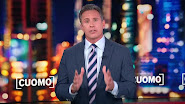
Source #3: Cuomo (https://www.newsnationnow.com/)


Late night news show, “CUOMO'' is one of my favorite sources for news and information. The show breaks down complex current events into understandable segments, allowing for the viewer to follow along with interest and ease. Cuomo’s extensive background in law and journalism adds depth to his analysis, and his interviews often feature challenging and thought-provoking questions. Additionally, Cuomo’s candid and confrontational approach can bring out critical insights and diverse perspectives that help to enrich my understanding of various topics and events. As an independent, he is (in my humble opinion) an unbiased reporter, and only seeking to inform, not to sway the viewers. 


Source #4: BBC (https://www.bbc.com/news)


I rely on the BBC for its global perspective and balanced reporting. I find the BBC’s commitment to impartiality and factual reporting to be particularly noteworthy. No matter what topic I am reading about, from environmental issues to global conflicts, I trust that the BBC’s article is well-researched and relatively unbiased, as the organization itself adheres to strict editorial guidelines. Additionally, its extensive network of international correspondents allows for them to be the first on the scene for any newsworthy event. The BBC’s early and unbiased reporting on worldly events is why it is one of my favorite news sources. 


Source #5 The New York Times (https://www.nytimes.com/)


As someone who values reliable and in-depth reporting, I find the New York Times to be an excellent source for news. Between their renowned investigative reporting and insightful opinion pieces, The New York Times has a well-established reputation for journalistic integrity and comprehensive coverage. Additionally, this source excels in multimedia storytelling, integrating high-quality photography, videos, and interactive elements throughout their articles that help keep the reader engaged and the story alive. Though if you ask me, it is their infamous NYT crossword that keeps their readers loyal. 


*Please note that no matter how reputable the source may be, in order to gain the most unbiased and nuanced understanding of a topic, try to visit at least 4 other credible sources before forming an opinion.

 Blog Post #10